
The AI Future of Work in 2026: Reshaping Jobs Instead of Replacing Them
New BCG research shows over half of US jobs will change dramatically — here’s why that’s actually good news and how to prepare.


Every day we scroll through headlines screaming that artificial intelligence is coming for our jobs. “AI will replace millions!” “Your career is doomed by 2026!” It’s scary, right? But what if the real story isn’t about mass unemployment but about massive transformation?
According to a recent Boston Consulting Group (BCG) report, over the next two to three years, 50% to 55% of jobs in the United States will be reshaped by AI. That’s not the same as eliminated. For many people, it means they’ll keep a very similar role, but the way they work—and what’s expected of them—will change dramatically. At the same time, only about 10% to 15% of jobs are truly at risk of being fully replaced in the next five years.
The World Economic Forum’s Future of Jobs Report 2025 paints a similar picture globally: while some roles will decline, technology is expected to drive the creation of many new positions, leading to a net gain of around 78 million jobs by 2030. AI isn’t just taking away—it’s also creating opportunities, especially in areas like AI and machine learning specialists, big data experts, cybersecurity professionals, and fintech engineers.
So, What Does “Reshaping” Actually Look Like?
Think of AI as an incredibly smart intern who never sleeps. It can handle repetitive, data-heavy, or routine tasks at lightning speed. That frees humans to focus on the parts of work that actually require judgment, creativity, empathy, and strategic thinking.
Here are a few real-world examples of how this shift might play out in 2026:
Marketing professionals: Instead of spending hours writing basic social media posts or generating first-draft ad copy, you’ll use AI tools to create dozens of variations instantly. Your real value? Understanding your audience on a deep human level, crafting authentic brand stories, making ethical decisions, and approving the final creative direction that resonates emotionally.
Software developers and engineers: AI coding assistants (like advanced versions of GitHub Copilot) will write routine code and debug simple issues. Developers will spend more time on system architecture, solving complex problems, collaborating with teams, and ensuring the final product aligns with real user needs and business goals.
Customer service roles: Chatbots and AI voice agents will handle basic queries 24/7. Human agents will step in for complicated complaints, emotional situations, or high-value clients who need genuine empathy and creative problem-solving.
Teachers and managers: AI can personalize lesson plans or analyze team performance data, but inspiring students, building team culture, resolving conflicts, and providing emotional support? That still requires a human touch.
Even in fields like healthcare, law, and finance, AI will analyze scans, review documents, or spot patterns in data much faster than we can. But doctors will still make final diagnoses considering the whole patient, lawyers will craft strategy and argue in court, and analysts will interpret insights in a broader business or ethical context.
The Skills That Will Matter Most in the AI Era
If AI is going to reshape so many jobs, what should you focus on right now?
AI Literacy & Collaboration — Learn how to work effectively with AI tools. This includes writing good prompts, verifying AI outputs, and integrating AI into your workflow without blindly trusting it.
Human-Centric Skills — These are becoming even more valuable:
Creative thinking and originality
Emotional intelligence and empathy
Critical thinking and complex problem-solving
Communication and storytelling
Ethical judgment and decision-making under uncertainty
Adaptability and lifelong learning
Reports consistently show that while technical skills (like AI and data) are growing fast, employers are also desperately looking for people who can combine those with strong human abilities.
Continuous Learning Mindset — The half-life of skills is shrinking. What you know today might not be enough in two years. Make learning a daily habit—whether it’s through online courses, experimenting with new tools, or simply staying curious.
Why We Should Feel Hopeful, Not Fearful
History shows us a pattern. When computers arrived, people feared they would destroy office jobs. Instead, they created entirely new industries and made workers more productive. The internet did the same. Now AI is the next big wave.
The key difference this time? The speed of change. Companies that treat AI as a teammate rather than a replacement will thrive. Workers who adapt quickly and combine AI efficiency with human insight will have a huge advantage.
Some experts even predict that AI could boost global productivity and GDP significantly, creating wealth that leads to new jobs we can’t even imagine yet—like roles in AI ethics, human-AI interaction design, or personalized education at scale.
Of course, the transition won’t be smooth for everyone. There will be real challenges: job displacement in certain sectors, the need for massive reskilling programs, and inequality if access to training isn’t fair. Governments, companies, and individuals all have a role to play in making this shift inclusive.
What You Can Do Starting Today
Experiment with AI tools in your current job. See what they can (and can’t) do.
Build a “human + AI” skill set. Don’t just learn prompts—practice turning AI output into something better through your unique perspective.
Invest in relationships and soft skills. Networks, trust, and emotional intelligence are hard for machines to replicate.
Stay informed but avoid doom-scrolling. Focus on actionable steps instead of fear.
2026 isn’t the year AI takes over. It’s the year AI starts working alongside us in more powerful ways than ever before. The winners won’t be those who fear the technology or those who blindly follow it—they’ll be the ones who learn to dance with it.
What about you? How do you see AI changing your own field in the next couple of years? Are you excited, worried, or somewhere in between? Drop your thoughts in the comments—I’d genuinely love to hear them. And if this article gave you a more balanced view, feel free to share it with someone who might need it.
The future of work isn’t about humans vs. AI.
It’s about humans with AI.
Let’s build that future together.
About the Creator
abualyaanart
I write thoughtful, experience-driven stories about technology, digital life, and how modern tools quietly shape the way we think, work, and live.
I believe good technology should support life
Abualyaanart
Keep reading
More stories from abualyaanart and writers in Futurism and other communities.
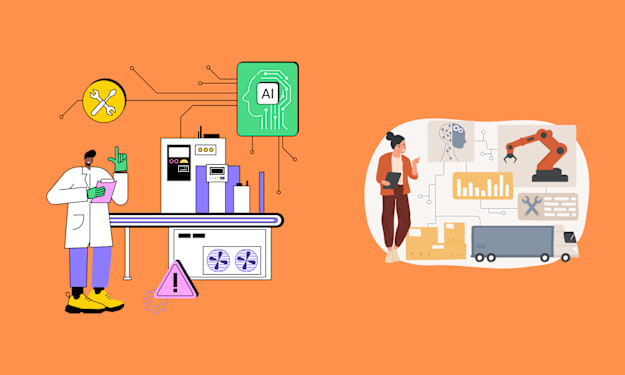
AI in Predictive Maintenance Market to hit USD 2,306.2 Million By 2033
Market Overview The global AI in Predictive Maintenance market is witnessing steady growth as industries increasingly focus on reducing equipment downtime and improving operational efficiency. The market is projected to grow from USD 722.9 million in 2023 to approximately USD 2,306.2 million by 2033, registering a CAGR of 12.3% during the forecast period. This expansion is being supported by the rising adoption of industrial automation, increasing deployment of IoT-enabled devices, and the need to optimize asset performance across sectors.
By Roberto Crum2 days ago in Futurism


Comments
There are no comments for this story
Be the first to respond and start the conversation.